
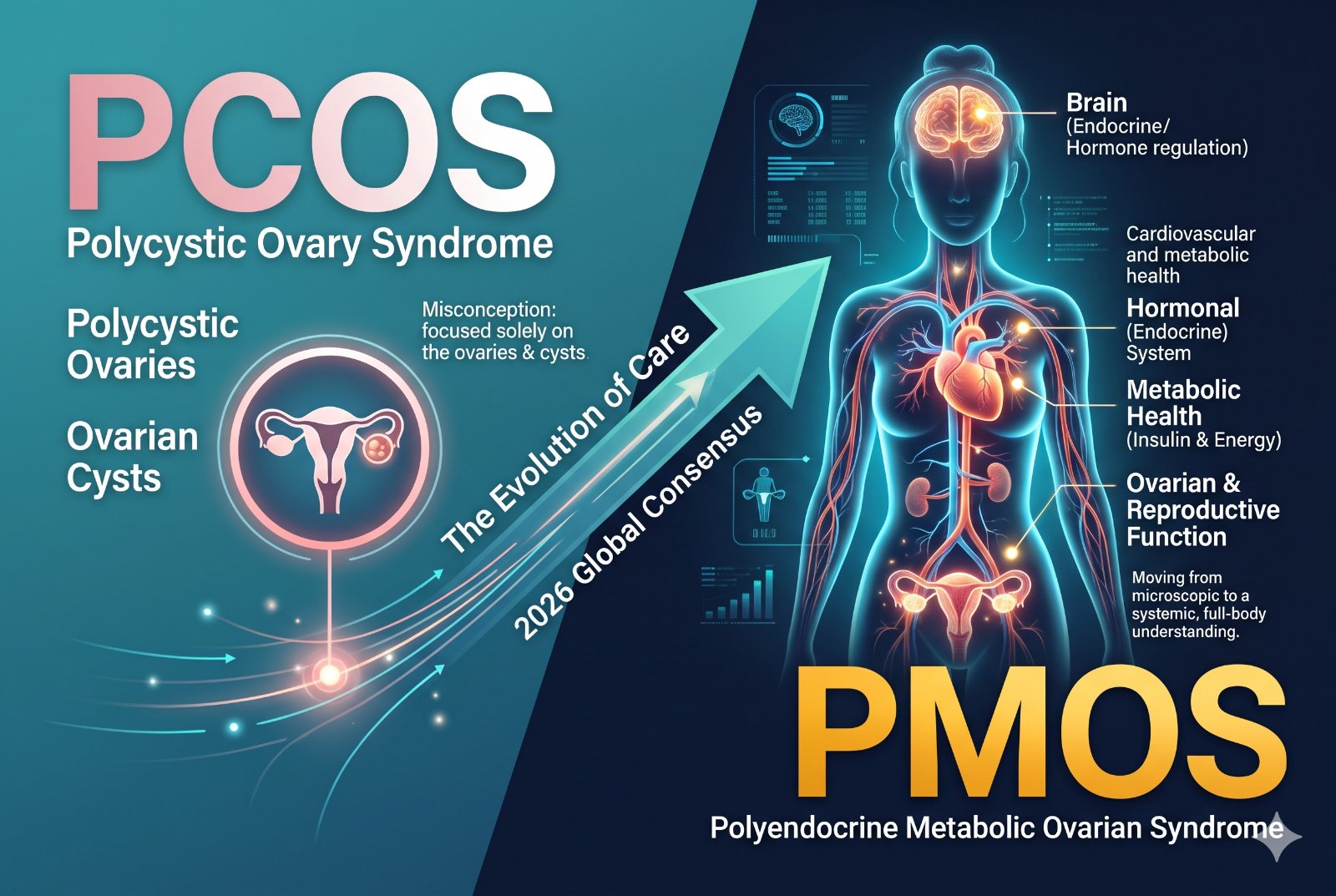
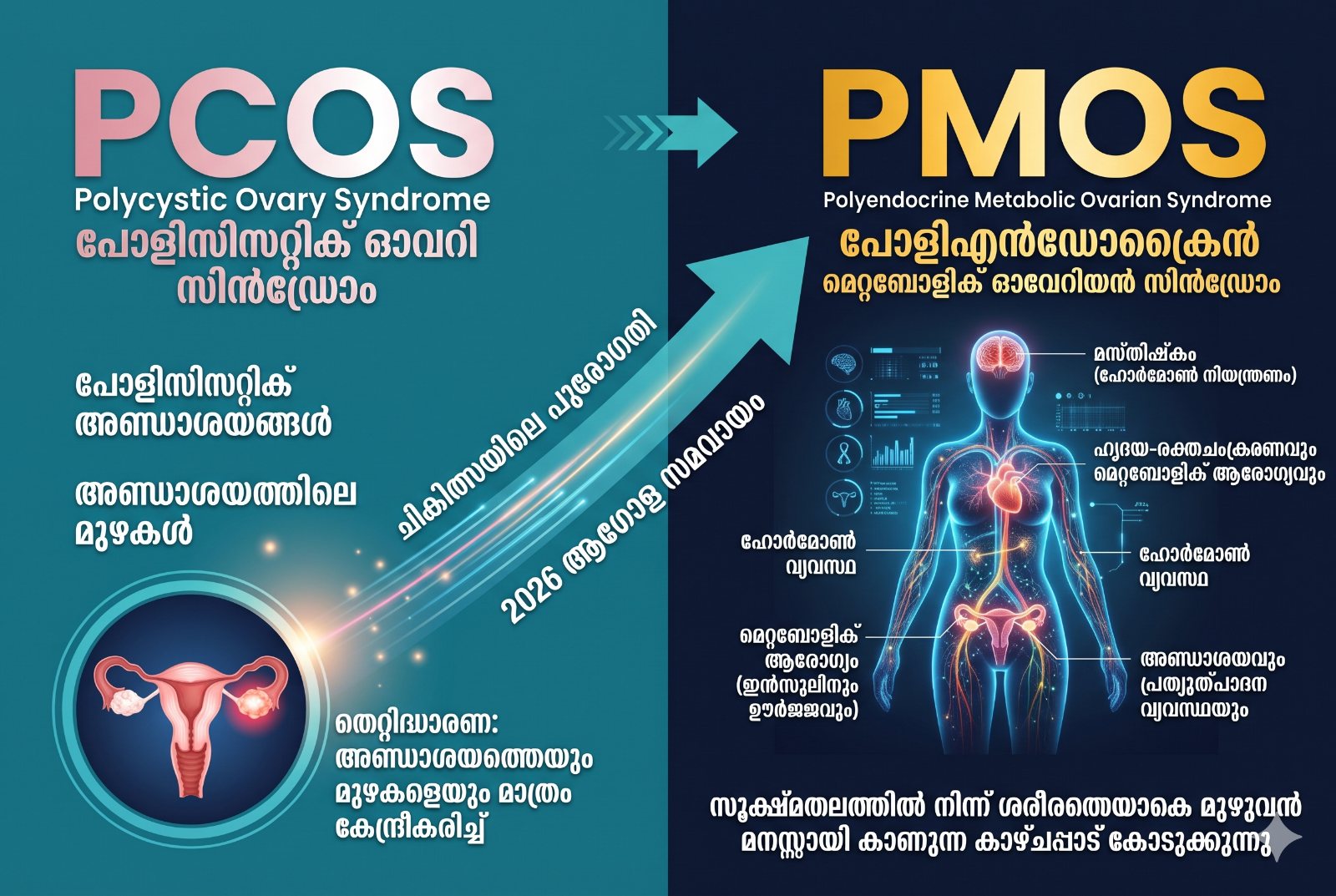
In May 2026, an international consensus published in The Lancet proposed a new name for polycystic ovary syndrome (PCOS): polyendocrine metabolic ovarian syndrome (PMOS). More than 14,000 people living with the condition and health professionals from around the world took part.
Why the name changed
- Many people with the condition do not have ovarian "cysts" at all — the old name suggested they were the main feature.
- The condition affects hormones and metabolism, not only the ovaries.
- The old name was linked with delayed diagnosis, scattered care and stigma, especially where fertility is a sensitive subject.
What PMOS involves
The new name reflects that the condition can affect several parts of health:
- Hormonal (endocrine) — for example, irregular periods
- Metabolic — weight, insulin and long-term heart health
- Reproductive — ovulation and fertility
- Skin and hair — such as acne or excess hair growth
- Emotional wellbeing — anxiety and low mood are more common
It affects an estimated 170 million women worldwide.
What happens next
A three-year transition is planned, during which guidelines, medical education and health records will gradually move to the new name. You may see both names — "PMOS (formerly PCOS)" — for some time.
A note on everyday habits
Regular meals, balanced nutrition, physical activity, good sleep and support for emotional wellbeing all play a part in looking after long-term health. If you have concerns about your periods, weight, skin or fertility, please speak with a qualified doctor.
This note is for general information only and is not medical advice.
Source: Teede HJ et al., The Lancet, 2026 — international consensus on renaming PCOS.